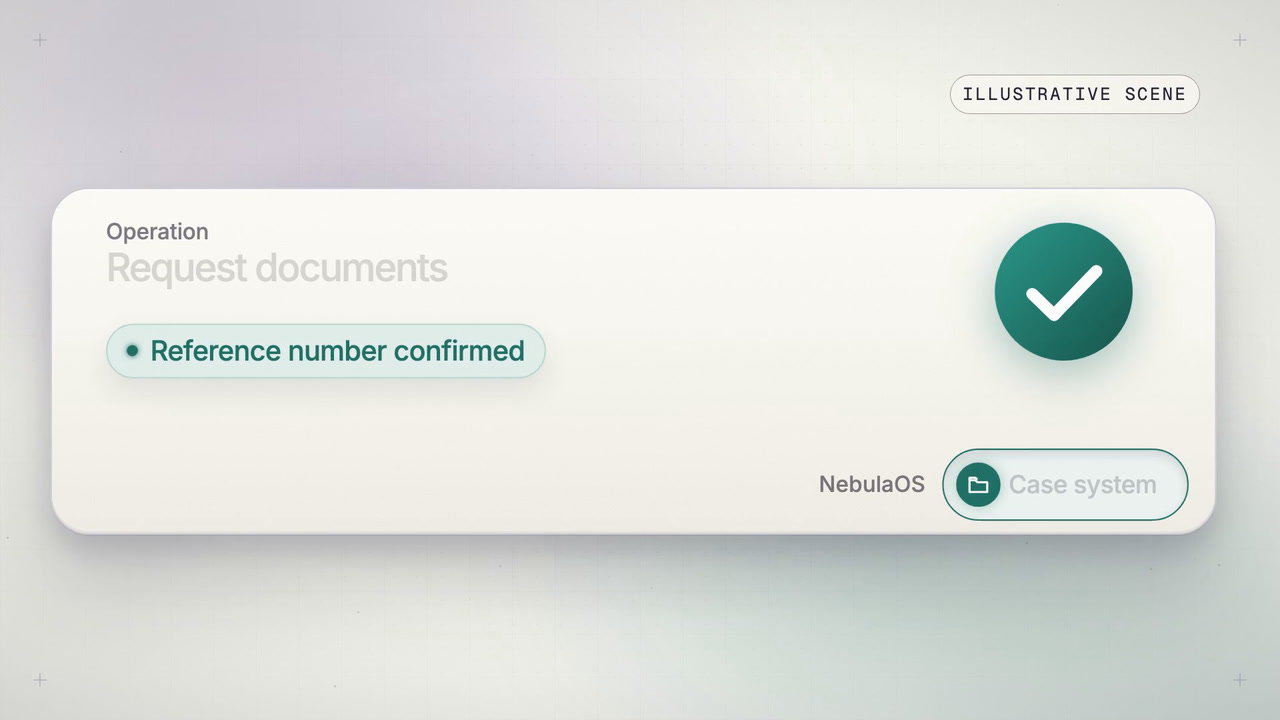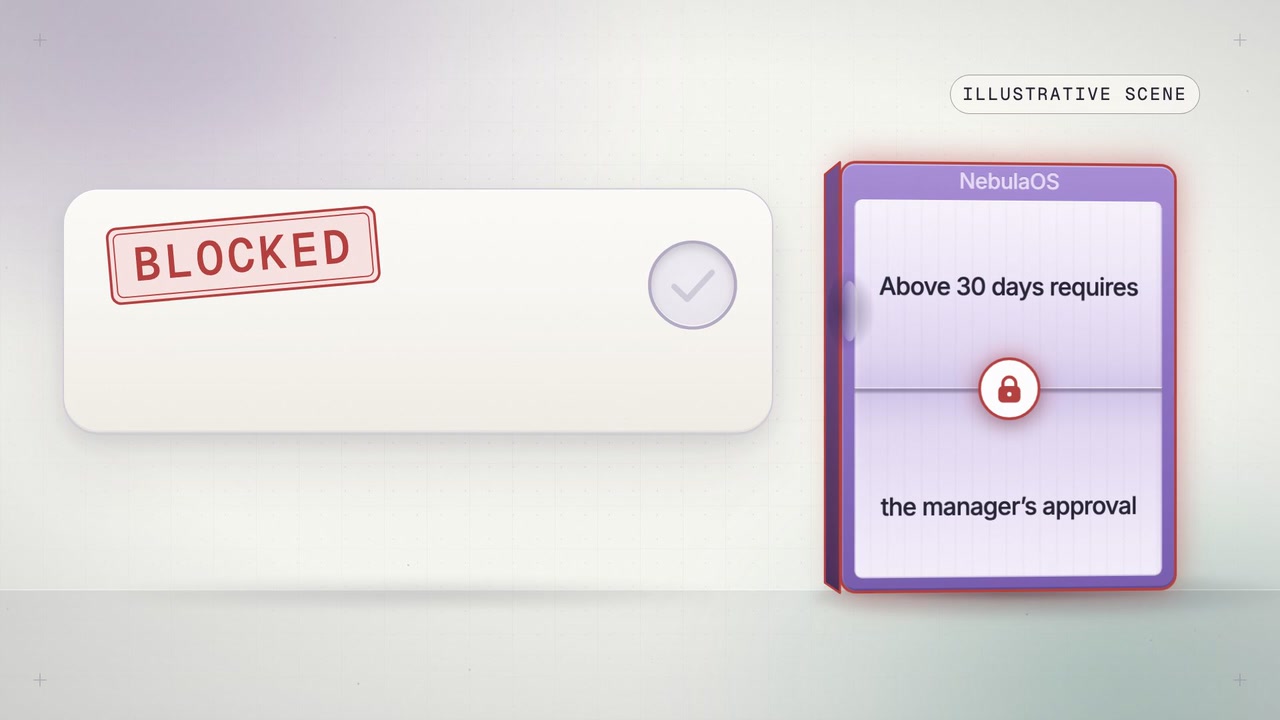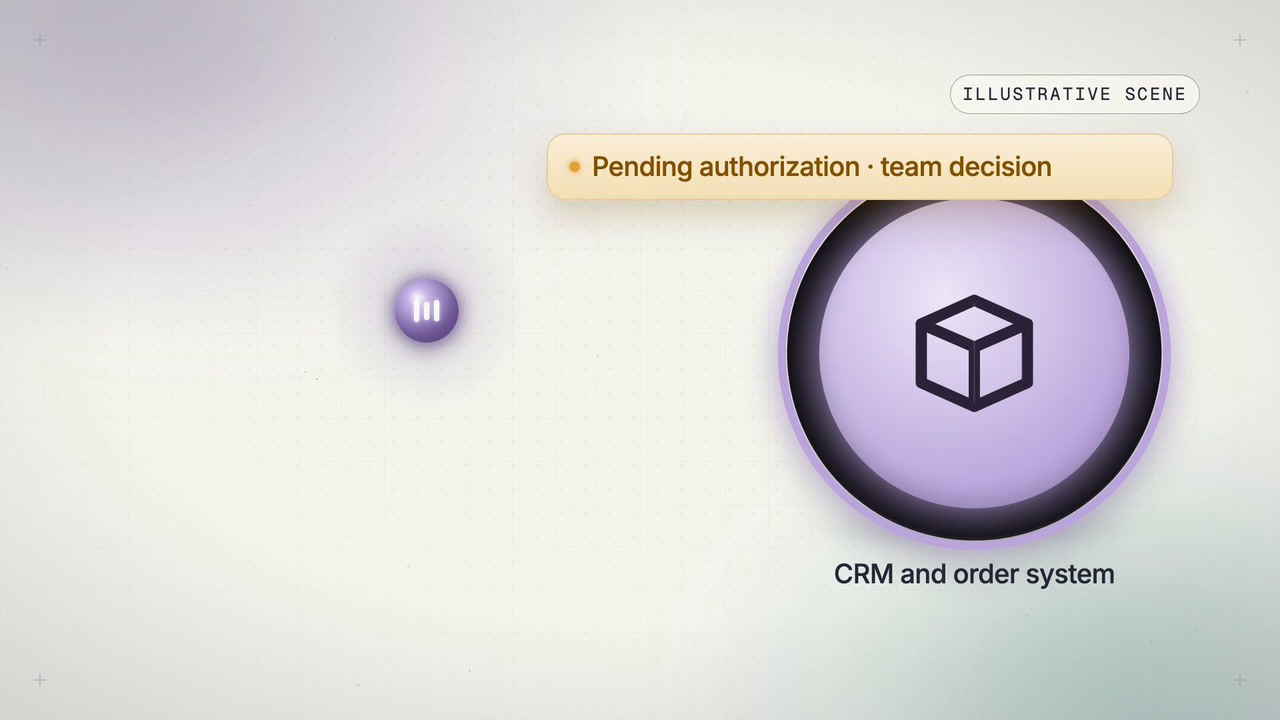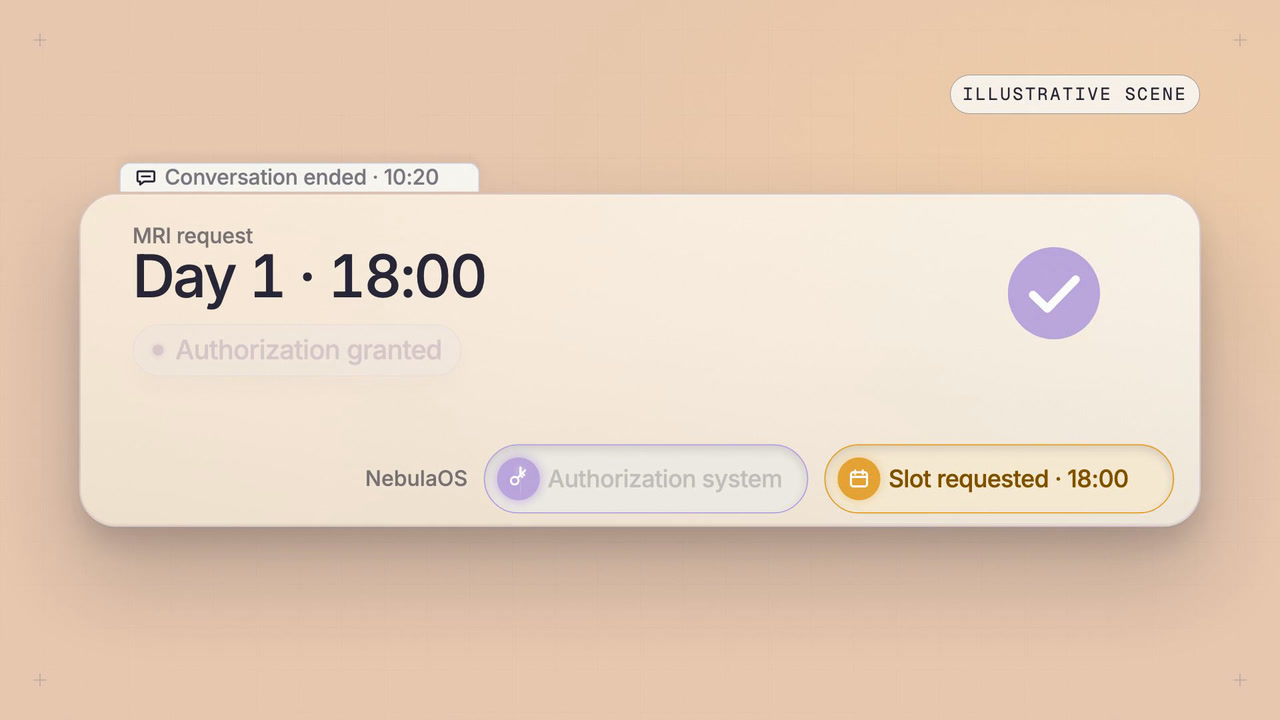
Work across systems
One call. Four systems.
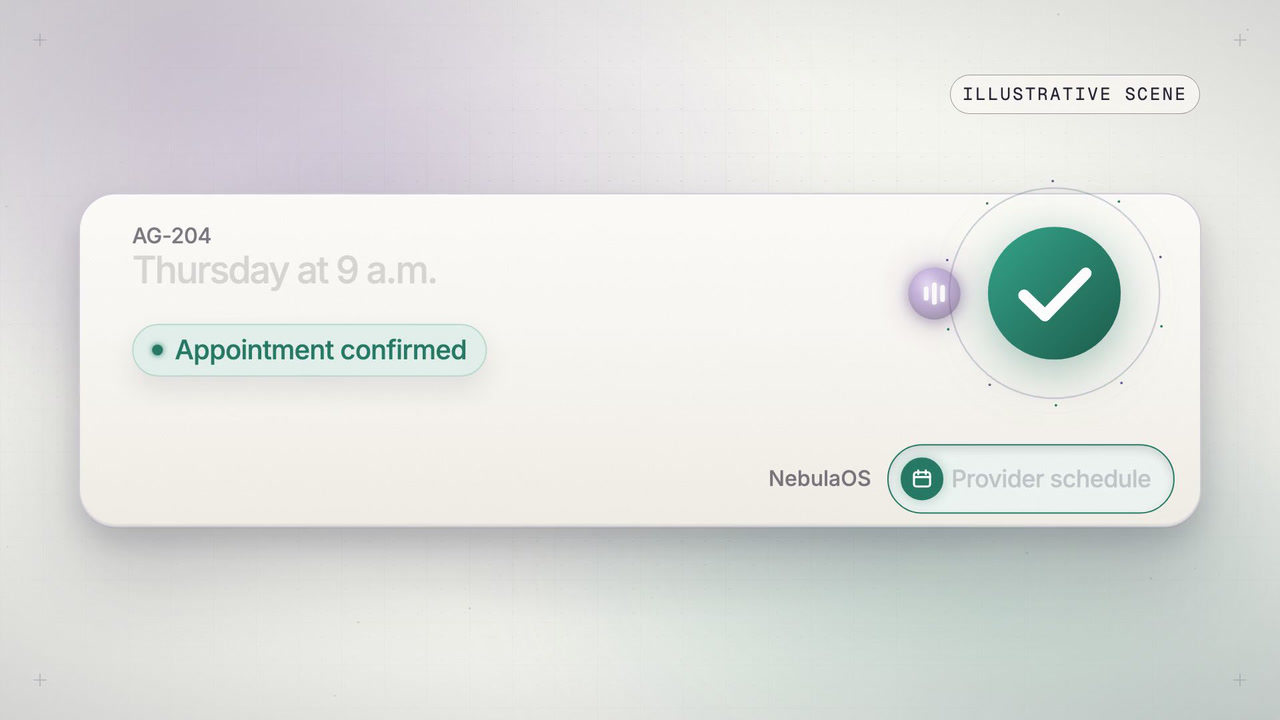
From the call to confirmation in the schedule: telephony, records, authorizations and the provider schedule, with each result attributed to the system responsible for it.
Examples
10 examples connect documents, rules, systems and people. Choose a situation and see what changes at each stage.
All examples are illustrative, with fictional data. Each scenario has a video of up to one minute.
Work across systems
From the call to confirmation in the schedule: telephony, records, authorizations and the provider schedule, with each result attributed to the system responsible for it.
Documents and missing items
Documents, pending items and a reference number organized from a reimbursement request, without anticipating coverage or payment.
Rules, authority and exceptions
A request for different payment terms meets its authority limit and reaches the person who can decide.
Handoff to people
History, attempts and the pending decision travel with the handoff to the person who takes the case.
Work that continues after the conversation
Events, deadlines and owners keep the case active after the conversation, up to the confirmed appointment; the exam itself is a later event.
Documents and missing items
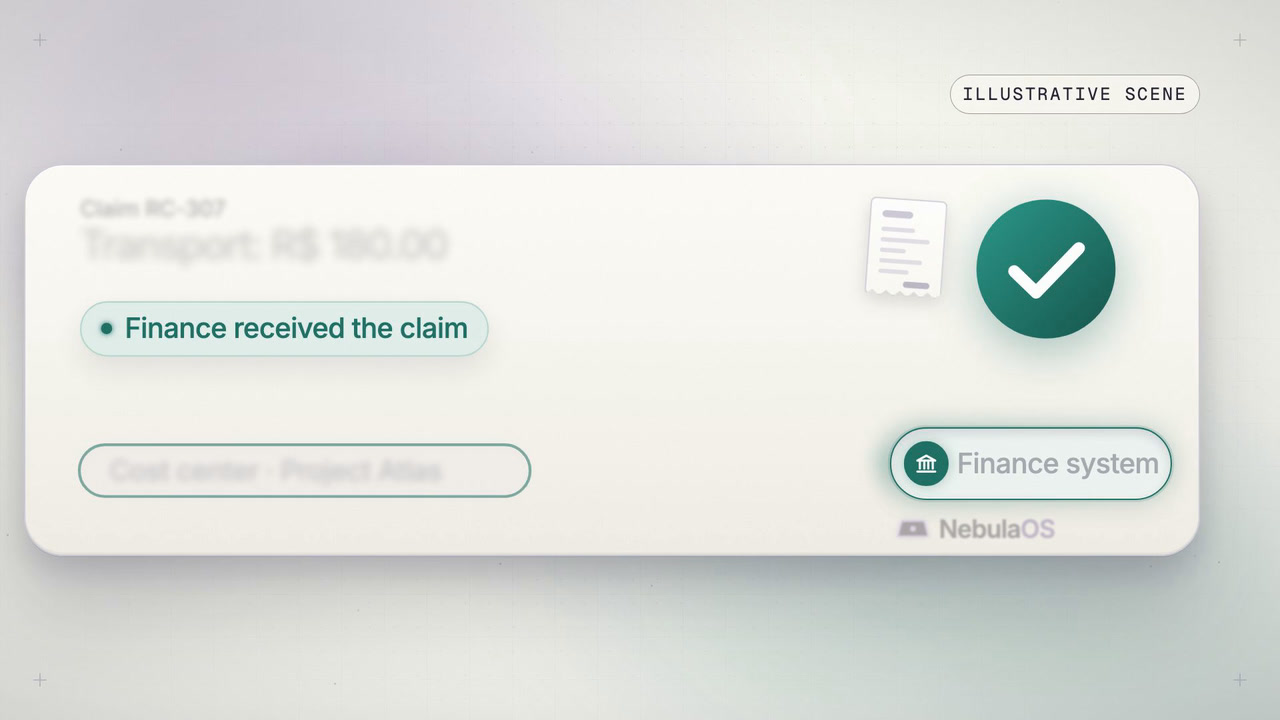
An expense goes through documents, classification, review and confirmation by finance that it was received, without declaring payment.
Work across systems
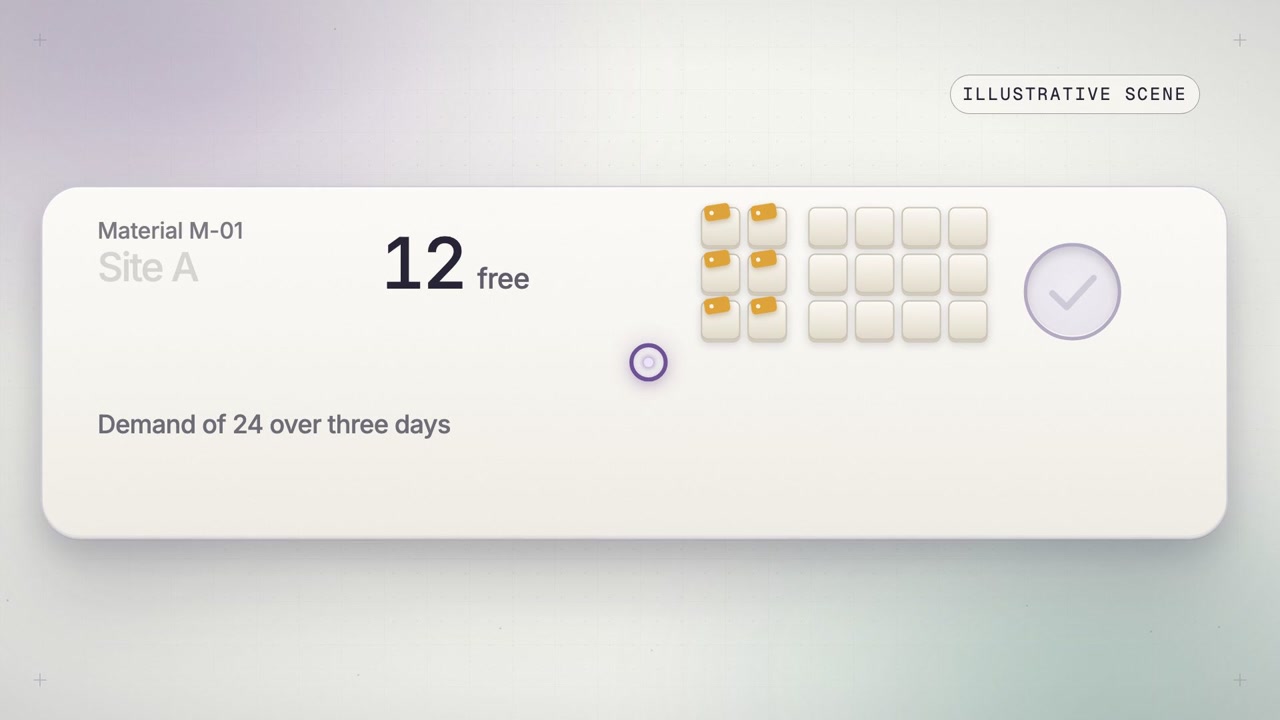
Stock, reservations and transfers change what the operation can promise; dispatch, transit and receipt are separate facts.
Rules, authority and exceptions
A logistics exception crosses an external event, policy, a decision, contact with the recipient and the carrier’s answer; acceptance of a new attempt is not delivery.
Documents and missing items
Follow an administrative discrepancy between a provider and an insurer, including documents, an exception and a response.
Rules, authority and exceptions
Compare coverage, availability, recorded qualification, room and budget before proposing a change.